
Story
Instrumental Hip-Hop?
Tim Stelloh writes for Pop Matters: "It sounds like a paradox: instrumental hip-hop. For all logistical purposes, it is. 'How can it be instrumental when there ain't no instruments!' barks …
Story
 City & County
On Social Media: Unique Dishes
What is your favorite unique dish at a Jackson restaurant? We’re looking for specific things you can’t find anywhere else—such as the seaside cakes at High Noon Café.
Story
 National
Energy Savings Simply in the Power of Observation
The Hawthorne effect can be a decisive factor in any study trying to assess energy awareness and electricity consumption, scientists at Carnegie Mellon University reported on Monday.
Story
 City & County
Need to Know Info
Important information on utilities and other services for people living in Jackson.
Story
 City & County
Facing Takeover, JPS Corrective Action Gains Urgency
After a first failed attempt at submitting a corrective action plan to get the district off probation, Jackson Public Schools made good on its second attempt.
Story
 Business
Continental Tire Spends More Than $200,000 in Mississippi
Continental Tire spent $228,300 in November, a spending report from the German-based corporation shows. The tire plant, opening just off Interstate 20 in Hinds County outside Clinton, will eventually hire …
Story
 City & County
JPS Bond Vote: 'It's So Integral to the Success of Every One of Us Students'
Jackson Public Schools officials and supporters of Tuesday's bond referendum held a press conference Monday, Aug. 6.
Story
 City & County
City Metrocenter Lawsuit Set for Trial this Month
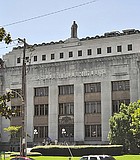
The Metrocenter Mall, a former shopping center and office space hurt by white and economic flight, is now being repurposed as a "Comprehensive One-Stop Center" for workforce training programs, even …
Story
 Health Care
Mississippi Ranks 50th in Overall Health, New Report Shows
Mississippi ranks 50th for the second year in a row in the United Health Foundation's health rankings. The foundation specializes in clinical expertise and health data, focused on making the …
Story
 Food
Food
Fair Food: Inspected and Ready to Eat
The Mississippi State Department of Health wrapped up inspections of 130 food booths at the State Fair right before it opened on Wednesday night.
Story
Police: 2 Dead, 4 Hurt in Shooting After Mississippi Parade
A shooting after a Mardi Gras parade in Pass Christian killed two men and wounded four other people Sunday, south Mississippi authorities said.
Story
 City & County
Lumumba's Family Alleges St. Dominic's Didn't Check for Heart Attack
The family of former Jackson Mayor Chokwe Lumumba is seeking restitution from two physicians and St. Dominic's Hospital in a wrongful-death suit filed on Tuesday in Hinds County Circuit Court.
Story
 LGBT
LGBT
Mississippi Supreme Court Says Same-Sex Divorce is Legal
The Mississippi Supreme Court has ruled Lauren Czekala-Chatham's divorce legal in concurrence with the ruling in Obergefell v. Hodges.
Story
 Health Care
Mississippi Loses Sixth Child To COVID-19
A sixth child has died in Mississippi due to complications from COVID-19, the Mississippi State Department of Health said Wednesday.
Story
 Biz Roundup
Family Fun Science Day and Game Changers at the Science Museum, Oops! All Vegan Restaurant
The Mississippi Museum of Natural Science is hosting a Family Fun Science Day event on Saturday, Jan. 15, from 10 a.m. to 3 p.m.
Entry

Jackson, a Twentysomething's Haven
By Kathleen M. MitchellLike a proud mother watching her child's first foray into the spotlight to glowing reviews, we at the JFP love to send links around the office of national stories realizing what we already know (that Jackson is pretty cool). Here are a couple stories circling our in-boxes this week:
The Atlantic Cities website published a story this morning called "Where Millenials Can Make it Now." The author, Nona Willis Aronowitz, traveled the country looking for the best cities for twentysomethings. She writes that she avoided "cities already deemed magnets for young, creative people—place like New Orleans, Austin, or Detroit." In the end she, chose nine cities, including Jackson. She puts Jackson into the category "Small Ponds for Big Fish" (Omaha, Neb., also makes this category), and describes our city thus:
"These are cities where creativity and entrepreneurship are on the rise, even as the rents remain reasonable. Chances are, small ponds have DIY art scenes: Omaha boasts a thriving start-up economy and the still-relevant force of Conor Oberst’s Saddle Creek Records while Jackson’s Fondren and Midtown neighborhoods have sparked a local art community. Yet even in the gentrified corners of town, the price points remain low by necessity, since most people aren’t making much money. And since there isn’t a shortage of space, local politicos are practically begging young people to take abandoned buildings and empty lots off their hands. Many of the twentysomethings I spoke with in these towns were on a first-name basis with the mayor or city council. One Jackson native was even running for office. These cities have a growing population of young people who would rather start something from the ground up and live cheaply than scramble anonymously in huge cities."
Aronowitz will be elaborating on her travels and the cities she chose over the next two weeks, so check back for more on Jackson.
Read her introductory story here: http://www.theatlanticcities.com/jobs-and-economy/2013/11/where-millennials-can-make-it-now/7454/
And keep an eye on the landing page for "Where Millenials Can Make It" for Jackson's full feature: http://www.theatlanticcities.com/special-report/where-millennials-can-make-it/
Another publication, the website Credit Donkey, recently named Jackson the fifth-best small city for starting over. The story comes from a study that took into account factors of population growth, income growth, unemployment rate and percentage of single adults. The idea is that these cities are great for mostly young, single folks looking for a new job and a new life. Here's how they described Jackson:
"If you’re single and hoping to start over in a new city, Jackson is one of our top locations for you, especially if you want some authentic Southern charm. With a strong music scene, particularly gospel and blues, Jackson is aptly nicknamed the "City with Soul." Literature lovers will want to visit the Eudora Welty House to explore the home and gardens of the Pulitzer Prize winner who wrote The Optimist’s Daughter. You can also visit the Medgar Evers Home Museum to learn about the civil rights activist’s contributions to our nation’s history."
See that story here: …
Entry

AFA Edits Their Alert; Now Blames Gays for Fooling Businesses
By Todd StaufferThis past week I wrote a Publisher's Note called "AFA Bearing False Witness Against Businesses?" about the American Family Association's "action alert" wherein they called the "We Don't Discriminate" campaign discriminatory, despite the very basic tautological problems with their argument. (It seemed to me they were going to have to define "don't" as "do" in order to make their argument make any sense.)
So I was intrigued this week to see the AFA has now edited that exact same alert from its original headline of "A List of Businesses Displaying Hatred Toward Religious Freedom" to the new headline "Businesses Suckered By Homosexual Reaction to MS Religious Freedom Restoration Act."
The alert is otherwise dated the same (suggesting, falsely, that they wrote the current text on May 9, 2014, when it actually sometime between May 16th and 19th), it has the same URL and it still has the title "A List of Businesses Displaying Hatred Toward Religious Freedom" at the top of the window.
Here's a screenshot of the original:
http://jacksonfreepress.com/users/photos/2014/may/20/17455/
Here's the new one:
http://jacksonfreepress.com/users/photos/2014/may/20/17456/
Aside from the fact that replacing their earlier statements and pretending they wrote them 10 days ago once again calls into question this self-proclaimed Christian organization's relationship with the Ninth Commandment, it's also instructive to note where they now pretend their argument has been the whole time -- gays are apparently suckering businesses into putting the sticker in their window.
Again, a reminder: The campaign is a reaction to a law signed recently in Mississippi that may allow businesses to discriminate against other based on their religious beliefs. The sticker proclaims a given business' desire to work with all customers despite that law.
Given that the law -- which AFA, partner organizations and Governor Bryant wanted -- is now in existence, the sticker can help people at risk of being discriminated against know that a business won't discriminate against them.
The sticker doesn't say a darned thing about other people or businesses who don't have the sticker.
That said, this is, at least, a slightly better tactic on the part of the AFA for its own sake, since the original plan (still evident) was to simply castigate the businesses for proclaiming their anti-discriminatory stance.
Blaming the businesses, in hindsight, was pretty stupid, as the businesses have a clear right (a.) not to discriminate against their customers and (b.) to tell people about it.
(Pretending that The Gays are using their convince-o-tron on hapless business owners is, at least, a slightly less stupid tactic. Progress!)
Now, the new text calls on those who read the alert to further the AFA's agenda by asking the business owner if they aware the sticker is "part of a plan to bully, intimidate and demean Christians."
Since it's not, then that's false witness, but the AFA seems to operate with a special exemption from the 9th.
Maybe re-reading Proverbs 6:16-19 would help?
Entry
ACLU Challenges Debt Collection Practices That Target the Poor
By AnnaWolfeThe following is a verbatim press release from the American Civil Liberties Union.
ATLANTA – The American Civil Liberties Union today filed a federal lawsuit challenging debt collection practices that have resulted in the jailing of people simply because they are poor. The case was brought on behalf of Kevin Thompson, a black teenager in DeKalb County, Georgia, who was jailed because he could not afford to pay court fines and probation company fees stemming from a traffic ticket.
"Being poor is not a crime. Yet across the county, the freedom of too many people unfairly rests on their ability to pay traffic fines and fees they cannot afford," said Nusrat Choudhury, an attorney with the ACLU's Racial Justice Program. "We seek to dismantle this two-tiered system of justice that punishes the poorest among us, disproportionately people of color, more harshly than those with means."
The ACLU charges that DeKalb County and for-profit Judicial Correction Services Inc. (JCS) teamed up to engage in a coercive debt collection scheme that focuses on revenue generation at the expense of protecting poor people's rights.
The U.S. Supreme Court ruled more than 30 years ago that locking people up merely because they cannot afford to pay court fines is contrary to American values of fairness and equality embedded in the 14th Amendment to the U.S. Constitution. The court made clear that judges cannot jail someone for failure to pay without first considering their ability to pay, efforts to acquire money, and alternatives to incarceration.
No such consideration was given to Thompson, who was locked up for five days because he could not afford to pay $838 in fines and fees to the county and JCS – despite the fact that he tried his best to make payments. The lawsuit charges that Thompson's constitutional rights to an indigency hearing and to counsel were violated by DeKalb County, JCS, and the chief judge of the local court that sentenced him to jail.
"What happened to me, and others like me who try their best to pay fines and fees but fall short, is unfair and wrong," said Thompson. "I hope this lawsuit will help prevent other people from being jailed just because they are poor."
These debt collection practices have had a devastating impact on people of color in the Atlanta metropolitan area. While blacks make up 54 percent of the DeKalb County population, nearly all probationers jailed by the DeKalb County Recorders Court for failure to pay are black – a pattern replicated by other Georgia courts.
"In a country where the racial wealth gap remains stark, the link between driving while black and jailed for being poor has a devastating impact on communities of color," said Choudhury.
The case, Thompson v. DeKalb County, was filed in U.S. District Court in Atlanta. It names DeKalb County, Chief Judge Nelly Withers of the DeKalb County Recorders Court, and Judicial Correction Services Inc. as defendants. Rogers & Hardin LLP, the ACLU of Georgia, and Southern Center for …
Entry

NCAA Still Looking into Rebels Football Program
By bryanflynnIt looks like the University of Mississippi’s football program isn’t out of the woods with the NCAA. The university was charged with 28 violations—13 in football and the rest in track and field and women’s basketball.
While the school tried to deflect that most of the violations happened under the watch of former head coach Houston Nutt, the investigation revealed that nine of the 13 violations happened under current head coach Hugh Freeze.
It looked like the NCAA investigation would soon end, but the school got hit again, this time during April on the first night of the 2016 NFL Draft.
A video of former Rebels offensive tackle Laremy Tunsil smoking a bong attached to a gas mask leaked right before the draft started. The most damning part of the night, at least as far as the university is concerned, happened after Tunsil was drafted, when texts of the player asking for money to pay rent and bills for his family were leaked.
In May, the school imposed a reduction of 11 scholarships from 2015 to 2018 and other small penalties. UM asked the NCAA to not have the school meet with the Committee on Infractions this summer to give them time to look into the Tunsil text messages from draft night.
ESPN later reported that the text messages were real, but the school was still looking into them to see if they had been altered before they were released. The UM staff member in question, Barney Farrar, denied that Tunsil had ever asked him for money.
Since the days after the draft, the story has died down, and the focus started to shift to the start of the upcoming season. That is, until today.
Yahoo! Sports columnist Pat Forde has reported that sources have told him that the NCAA is talking to players at other schools, discussing their Rebels recruitment.
The schools in question happen to be rival Southeastern Conference and West Division foes Auburn University, Mississippi State University and possibly one other SEC West school, Forde said. The players have been given immunity from possible NCAA sanctions for their truthful testimony.
It is easy to say that rival schools or the players who are bitter because UM didn’t offer them a scholarship will say anything to hurt the Rebels. Until the full details of this new investigation are known, the NCAA could possibly be working on new violations or just chasing their tail.
In reality, it doesn’t hurt for the NCAA to do its due diligence and investigate everything with the Rebels football program. If the organization finds nothing, the Rebels can tout that they have cleaned up their program. If the NCAA does find more violations, it can justify bringing the hammer down.
The timing is tough for Freeze and the Rebels, who will have to answer questions about a new investigation a little more than a week before the new season begins. …
Entry
Men’s Basketball Rule Changes Incoming
By bryanflynnThe NCAA announced two rule changes for the men’s 2017 Postseason National Invitation Tournament. Those rule changes will make the NIT different from the Division I Men’s NCAA Tournament.
Fouls will be reset after 10 minutes of play each half, and the league will eliminate the one-and-one bonus free-throw opportunity. After a team commits four fouls, every successive foul will allow the opposing team to shoot two free throws until fouls reset.
In overtime, teams that commit more than three fouls will award their opponents with two free throws for each foul.
Technical fouls won’t count toward those numbers. Resetting the fouls will mimic how the game would work with four 10-minute quarters instead of two 20-minute halves.
The women’s game switched from two 20-minute halves just before the start of the 2015-2016 season. Olympic basketball, high-school basketball and the NBA play four quarters, so moving the men’s game to four quarters puts it in line with the rest of basketball. Of course, the length of the quarters is different for each level of play.
The other rule change is that the shot clock will stay the same or reset to 20 seconds, whichever is greater, after the defense commits a foul and a team inbounds the ball to the frontcourt. This rule change is to give each team more possessions. The shot clock used to reset to 30 seconds after defensive fouls.
The idea is that with more possessions, teams should score more points. As teams shoot more three-point shots, changing the shot clock might not actually increase scoring that much, though.
Personally, I like the idea of the men’s game playing four quarters. Each season, I watch more and more women’s basketball because it seems like the flow of the game is faster and smoother than it is for the men.
The NCAA should just go all in and make the NIT four quarters and see how the games play out. Between that and the foul changes, coaches will have to alter their decisions and late-game strategy.
If they’re discussing rule changes, can the NCAA Tournament exclude teams that don’t finish .500 or better in conference play? In the ESPN and Sports Illustrated bubble watch, there are several teams from major basketball conferences that could make the tournament with losing conference records.
Teams shouldn’t be rewarded for being worse than mediocre in their own conference. Playing in a tough basketball conference shouldn’t mean you get in the tournament if you can’t finish .500 in the league.
There are plenty of mid-major conferences with teams that finish above .500 in conference play, but the major conferences including the ACC, Big East and Big 12, that are getting shorted because of that rule.
Instead, reward those mid-major conferences with more bids. The field is 68 teams, but the major conferences get over-rewarded with bids and take up half the field. Those major conferences get bids that they …
