Entry

Verbatim: Settlement Ends “Debtors’ Prison” System in Jackson, Mississippi
By Tim Summers Jr.JACKSON, Miss. – The landmark settlement of a federal class action against the City of Jackson, Mississippi, has brought an end to that city’s self-described “pay or stay” system alleged to have sent hundreds of people to jail each year because they could not pay fines and fees in misdemeanor cases.
The City has agreed to give indigent defendants the choice of paying off their fines at the rate of $25 per month or performing community service and receiving credit toward their unpaid fines at the rate of $9 per hour.
In addition, Jackson no longer will require people arrested for misdemeanors to post a money bond in order to avoid pre-trial detention. Rather than releasing only those people who can afford to pay a bond and detaining those people who – although presumptively innocent – are too poor to pay their way out of jail, the city will release all people arrested for misdemeanors upon their written promise to appear in court on a specified date for a trial or other hearing. As an alternative to money bond, the city’s judges will have the option to place non-monetary pre-trial conditions on people arrested for misdemeanor offenses. For example, a judge might order a person accused of shoplifting to stay away from the location of the alleged misdemeanor until after the resolution of that person’s case.
The agreement is part of a settlement reached in the lawsuit filed by Equal Justice Under Law, a non-profit civil rights organization in Washington, D.C., and the Roderick and Solange MacArthur Justice Center at the University of Mississippi School of Law. The case was filed on behalf of seven Jackson residents who were ordered to jail by Jackson municipal judges for periods ranging from 26-90 days due to their inability to pay court debts imposed in misdemeanor cases.
The lawsuit challenged Jackson’s practice of sending impoverished people to jail when they failed to pay their court debts without regard for whether they actually had the financial ability to pay. Persons sent to jail under this system received credit toward their unpaid debts at a rate of $25 per day of incarceration at the Hinds County Jail, or $58 per day if they participated in the mandatory work program at the Hinds County Penal Farm.
As a result of this practice, some people spent several months in jail while working off their debts.
The lawsuit alleged that this practice was carried out for more than a decade and resulted in the incarceration of hundreds of indigent defendants each year.
U.S. District Judge Tom S. Lee of the Southern District of Mississippi entered a declaratory judgment in Bell v. City of Jackson setting forth the limitations on incarcerating defendants for failure to pay fines. The judgment states: “It violates the Constitution to incarcerate an individual, either before or after trial, solely because an individual does not have the ability to make a monetary payment…. Based upon this constitutional principle, no individual may be held in jail …
Story
 Editor's Note
Of Love and Orlando
The day before a gunman massacred 49 mostly Latino men and women at the gay club, Pulse, in Orlando, I was wandering through the Brooklyn Pride festival in New York …
Entry

ESPN Doc on O.J. Worth Watching
By bryanflynnAnytime there is a new ESPN “30 for 30” documentary, it is normally worth taking time to watch. But the latest entry, a five-part, almost-eight-hour-long series called “O.J.: Made In America” from director Ezra Edelman, might be the best documentary the network has done. If you haven’t watched “O.J.: Made In America,” don’t read any further, as this post contains spoilers.
Even 22 years after the murders of Nicole Brown-Simpson and Ron Goldman, this case still lives in infamy. The O.J. Simpson murder trial also brought up issues that we continue to struggle with as a society today, such as race and domestic violence.
Race and racism are where Edelman begins in parts one and two. He does a great job of showing the treatment of black people in Los Angeles as Simpson began his journey to fame on the gridiron and the Rodney King beating and trial spurred riots on the streets.
This look back at the rise and fall of Simpson provides some interesting tidbits in all five parts.
Simpson’s friend Joe Bell says the now infamous football player’s father was gay and tells how Simpson stole best friend Al Cowlings’ girlfriend, Marguerite Whitley. Simpson later married Whitley at age 19, and as the two stayed friends, Cowlings later drove the white bronco in the famous slow-speed chase.
Most of us at a certain age remember Simpson as the bumbling Nordberg from “The Naked Gun” film series, but in parts one and two of the documentary, you see the moves on the football field that made Simpson a Heisman Trophy winner and NFL Hall of Fame player.
One of the most interesting things in part one is that Simpson wanted nothing to do with the Civil Rights Movement. At one point, he told activist Harry Edwards, when approached about boycotting the 1968 Olympics, “I’m not black; I’m O.J.”
The documentary’s first episode touches on Simpson’s early struggles in Buffalo, as well as his first meeting with an 18-year-old Nicole, who was working at private L.A. nightclub The Daisy, and telling a friend that he would marry her.
The former NFL running back began dating Nicole while still married to Whitley.
Part two devotes some time to Simpson’s cheating on the golf course and his daughter drowning, but mainly, the focus is on his treatment of women. The documentary shows him as a womanizer and delves into how he mentally abused a pregnant Nicole by telling her his affairs were a result of her getting “fat.”
Domestic violence plays a major part in the second episode, as Simpson gets away with abuse because of his charm and celebrity. Even ESPN had a hand in the way the public viewed him.
In an ESPN show called “Sports Look,”host Roy Firestone makes excuses for Simpson’s 1988 attack on Nicole, who needed medical treatment as a result. Firestone was just one of the many people who made excuses for Simpson’s domestic violence. After one …
Entry
U.S. District Judge Dismisses ACLU HB1523 Lawsuit
By adreherU.S. District Judge Carlton Reeves dismissed the ACLU's lawsuit that tried to dismantle House Bill 1523 before it becomes law next week. In his order, Reeves wrote that the ACLU's complaint did not satisfy the criteria for him to issue a preliminary injunction to block HB1523 from becoming law. Reeves wrote that the plaintiffs needed to prove that injury was "imminent" in order for a preliminary injunction to be considered. The plaintiffs, Nykolas Alford and Stephen Thomas are engaged to be married but do not plan to do so for a few years. Reeves said for a threat to be imminent, it "threatens to occur immediately."
"Alford and Thomas’s injury, if one exists, would arise when they apply for a marriage license. But they declare that they will apply for their license sometime within the next three years," Reeves wrote. "That is not imminent. The ACLU has the same problem. If a member of the ACLU intends to enter into a same-sex marriage in 2017, any injury is at least six months away."
Human Rights Campaign state director Rob Hill reiterated that HB1523 is dangerous and hateful legislation, in response to the order.
“H.B. 1523 represents the worst of Mississippi. If allowed to go into effect next week, it will lead to widespread discrimination against LGBTQ Mississippians at work, school and in family life. The business community -- including local and national companies and organizations such as Nissan, General Electric, the Mississippi Economic Council, the Mississippi Manufacturing Association and more -- has roundly condemned this dangerous bill," Hill said in a statement. "It will do harm to our community, our families and our economy and we must not allow it to stand. In the coming weeks, HRC will continue our ongoing efforts to ensure this bill is ultimately struck down or repealed.”
Judge Reeves will hold hearings for the two other lawsuits filed against House Bill 1523 together on Thursday this week. HB1523 will go into effect on July 1 if Reeves does not issue a preliminary injunction blocking it from becoming law.
Story
 LGBT
LGBT
HB 1523 in the Courthouse: Roberta Kaplan Makes Her Case
House Bill 1523 was destined to go down Congress Street, a straight shot from the Capitol to the federal courthouse, where U.S. District Judge Carlton Reeves heard the first arguments …
Story
 Biz Roundup
The Pet Shop of Fondren, Orangetheory Fitness, and Taste of Detroit
Taste of Detroit, a family-owned and -operated restaurant with locations throughout Detroit, branched out of the city and opened a location in Brandon on Friday, June 18.
Story
 Books
Books
Teresa Nicholas
About a year after Jackson-based author Teresa Nicholas released her first book, "Buryin' Daddy: Putting My Lebanese, Catholic, Southern Baptist Childhood to Rest," she decided to take on another challenge …
Photo

Entry
Cavs' Win Cements LeBron's Legacy
By bryanflynnThe city of Cleveland had endured 52 years of sport agony. Sports defeats so gut-punching that they were given names, so most sports fans could recognize the moment of disappointment.
Red Right 88 was the play call that ended the Cleveland Browns' 1980-'81 season with an interception from the Oakland Raiders. The Drive was the Denver Broncos' 98-yard march to a win over the Browns in the 1986 AFC Championship Game.
The Fumble was the costly turnover from Browns running back Earnest Byner as the Broncos won the 1987 AFC Championship Game. But it wasn’t just football that broke Cleveland hearts.
Baseball moments include The Catch by Willie Mays in game one of the 1954 World Series between the New York Giants and the Cleveland Indians and Off Nagy’s Glove, a blown save from Indians closer Charles Nagy that gave the Atlanta Braves their only World Series win of the 1990s.
Basketball in Cleveland saw The Shot by Michael Jordan, beating the Cleveland Cavaliers in the first round of the 1989 Eastern Conference Playoffs. The Shot ushered in the era of Jordan, as he victimized the Cavaliers including the 1993 Eastern Conference Semifinals.
Cleveland sports also suffered through The Move that saw the Browns move the Baltimore, Md. by owner Art Modell. The former Browns would become the Ravens and win two Super Bowls as the last Browns' title came in 1964 in the NFL Championship before the invention of the Super Bowl.
Of course there was also The Decision, when native son LeBron James left Cleveland for the Miami Heat. James won two titles with the Heat, as the Cavaliers became the worst franchise in the NBA after he left.
There were other moments in Cleveland history that didn’t earn names but left a mark—events like the 1994 MLB strike that ended one of the best Indians seasons in team history.
Even the NBA Finals last season saw the Cavaliers lose stars Kevin Love and Kyrie Irving before and during the finals. The Golden State Warriors ended up winning the NBA Championship.
Cleveland fans had to think that this finals would be just another moment of "almost," as the Cavaliers fell behind the Warriors 3-1 in the series. The Cavaliers got back in the series with Draymond Green being suspended in game five and a bit of a Warriors meltdown at the end of game six, as reigning MVP Steph Curry was ejected for the first time in his career.
Wins in game five and six allowed Cleveland to tie the series and force a game seven. Everything seemed in place for another sports moment that would rip the hearts out of Cleveland fans.
With the game tied 89-89 in the fourth quarter, every Cavaliers fan had to be thinking, "How would the sports gods gut-punch Cleveland?" But this time things were different, as what looked to be sure layup from Andre Iguodala turned into a game-changing block …
Story
'Mississippi Burning' Civil Rights Case Closed
The investigation into the infamous slayings of three civil rights workers in Mississippi is finally closed, the state's attorney general said Monday, 52 years almost to the day after the …
Story
 City & County
Jackson Police Purchase 39 Tasers: 'Intended to Save Lives'
The Jackson City Council gave the Jackson Police Department week the go-ahead last to purchase 39 "conducted electricity weapons," or Tasers.
Story
 Education
Mississippi Sees Growth in Early Childhood Literacy, Graduation Rates
Mississippi's public-school students are showing significant gains in graduation rates and kindergarten literary, the Mississippi Department of Education is reporting.
Story
 Person of the Day
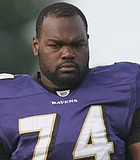
Michael Oher
The Panthers are making sure Cam Newton's blind side is protected. Carolina signed left tackle Michael Oher to a three-year contract extension on Friday.
Photo

Story
Trump Campaign Manager Forced Out
Republican presidential contender Donald Trump has forced out his hard-charging campaign manager, Corey Lewandowski, in a dramatic shakeup designed to calm panicked Republican leaders and reverse one of the most …
Story
Supreme Court Leaves State Assault Weapons Bans in Place
The Supreme Court has rejected challenges to assault weapons bans in Connecticut and New York, in the aftermath of the shooting attack on a gay nightclub in Orlando, Florida, that …
Story
 City & County
10 Local Stories of the Week
There's never a slow news week in Jackson, Miss., and last week was no exception. Here are the local stories JFP reporters brought you in case you missed them.
Story
 Business
Koinonia Coffee House Closes But Will Return
Koinonia Coffee House closes at the end of the month, owner Lee Harper announced this morning during the weekly Friday Forum, promising that in its place a whole new stage …
Story
 Education
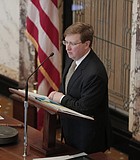
School Choice Group Names Lt. Gov. Reeves 'Education Reformer of the Year'
Empower Mississippi, an education "choice" nonprofit organization, named Lt. Gov. Tate Reeves the "Education Reformer of the Year" for his work on several education bills in the past legislative session.